


Click for BELLA

Bella’s Story


Read More

Cali the Cat


JUMP HERE

Thunder’s Triumph: A Girl and Her Horse


CBD – NATURAL RELIEF FOR YOUR PET

Cannabidiol (CBD), one of the active constituents of the cannabis plant, has profound healing and balancing effects on all mammals. Pet owners have used it for a broad spectrum of medical and behavioral issues — cancer pain, arthritis, muscle spasms, seizures, neurological and digestive disorders, anxieties, obsessions, past traumas, withdrawal, mood, and memory. During recovery from illness or surgery, CBD can stimulate appetite and speed healing. At the end of life, it can ease the pain and fear your pet may be experiencing. CBD does all this by stimulating the endocannabinoid system.

THE ENDOCANNABINOID SYSTEM AND HOW IT WORKS


Named after the plant that led to its discovery, the endocannabinoid system is a network of receptors located throughout the body. Short-lived natural endocannabinoid substances are synthesized on demand by the body to maintain homeostasis, a stable internal environment. When these internal mechanisms lag behind the body’s needs, supplementing with extra CBD can help. Research also suggests that supplementing can coax the body to build more receptors so natural cannabinoids will work more effectively.

Two types of receptors have been identified: CB1 receptors, predominantly in the brain, nervous system, glands and organs; and CB2 receptors, found mainly in the regulatory cells of the immune system. Many tissues contain both receptors, each linked to a different action. A key role of the endocannabinoid system is controlling inflammation by up-regulating or down-regulating the immune response. An overactive response can lead to allergies and auto-immune problems; an underactive one can leave the body susceptible to infections and the unchecked proliferation of cancer cells.

ADMINISTERING CBD AND DETERMINING DOSAGE


CBD is available in many convenient forms. Extracts can be given from a dropper bottle directly into the mouth, added to food, dropped on a treat, rubbed into bare skin or inside the ears, or dropped on an animal’s paw so they will lick it off. You can also find hemp CBD biscuits, hemp CBD capsules and gel caps, and topical hemp CBD ointments.

Dosage can vary quite a bit from one situation to the next. It may be necessary to experiment a little to find the right amount, and how often to give.

Typical suggested starting dose: 1 mg – 5 mg per 10 lbs. of bodyweight

    Cats: 1 – 5mg

Dogs:

10 lbs

 20 lbs

 30 lbs

 40 lbs

 50 lbs

60 lbs

70 lbs

 80 lbs


 1 – 5mg

 2 – 10mg

 3 – 15mg

 4 – 20mg

 5 – 25mg

 6 – 30mg

 7 – 35mg

 8 – 40mg

Start with a dose in the middle of the range. Changes usually occur within 30 minutes. If there is no change after an hour, increase the dosage. Occasionally improvements will take more than one treatment. To control pain, give approximately every 8 hours. For other uses, or to break unwanted behavior patterns, give once or twice a day.

SAFETY: HEMP VS. MARIJUANA


Although hemp and marijuana are both classified as cannabis, they are distinctly different varieties. Recreational marijuana is very high in euphoria-producing THC, while hemp plants contain virtually no THC but have high levels of beneficial CBD. Hemp-derived CBD is not psychoactive and it has no unpleasant side effects. Hemp products containing less than .3% THC are legal for sale in all 50 states. CBD from hemp is not regulated as a drug and has no known toxicity level.


Will CBD oil make your Animal High?


There are major differences between the hemp plant from which pet CBD (cannabidiol) oil supplements are extracted and cannabis. THC (tetrahydrocannabinol), the compound that gives marijuana its psychoactive properties, is only present in measurable amounts in cannabis, which contains very little CBD. Conversely, industrial hemp has high levels of CBD and virtually no THC. It’s important to note that THC can be toxic to dogs, but CBD is safe. Cannabis and THC are highly regulated even in states where its use has been legalized, but CBD extracted from industrial hemp is legal in all states.

Another point to keep in mind that is that CBD oil and hemp oil are not the same thing, especially for calming purposes. Though they’re from the same plant and neither product is psychoactive, hemp oil is made from pressed hemp seeds, which do not contain CBD. In comparison, CBD oil is extracted from a compound found in hemp flowers, leaves and stalks. Be sure to choose products that contain CBD, not just hemp oil.

The most important differentiation to remember is that hemp CBD offers all the benefits without the THC, so you can be assured that your dog won’t get high–instead, they’ll experience a level of mild relaxation without any intoxication.

Featured Products
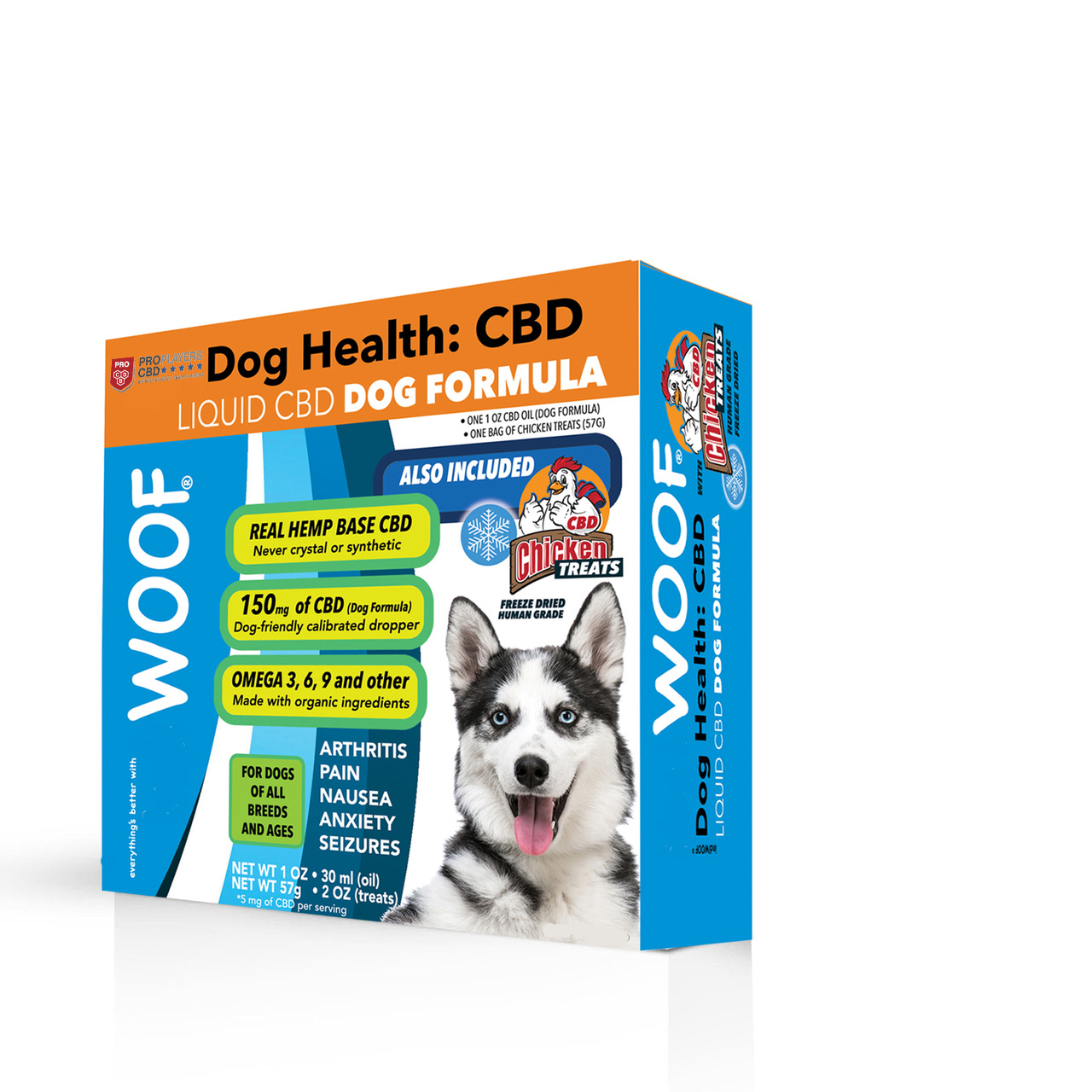
WOOF WOOF

CBD Liquid 30 ml / 1 fl oz bottle + PRO-PETUSA CBD Chicken Treats for Dogs

Buy Now - WOOF

WOOF WOOF / MEOW MEOW

 PRO-PETUSA CBD Chicken Treats for Dogs and or Cats

Buy Now - Treats

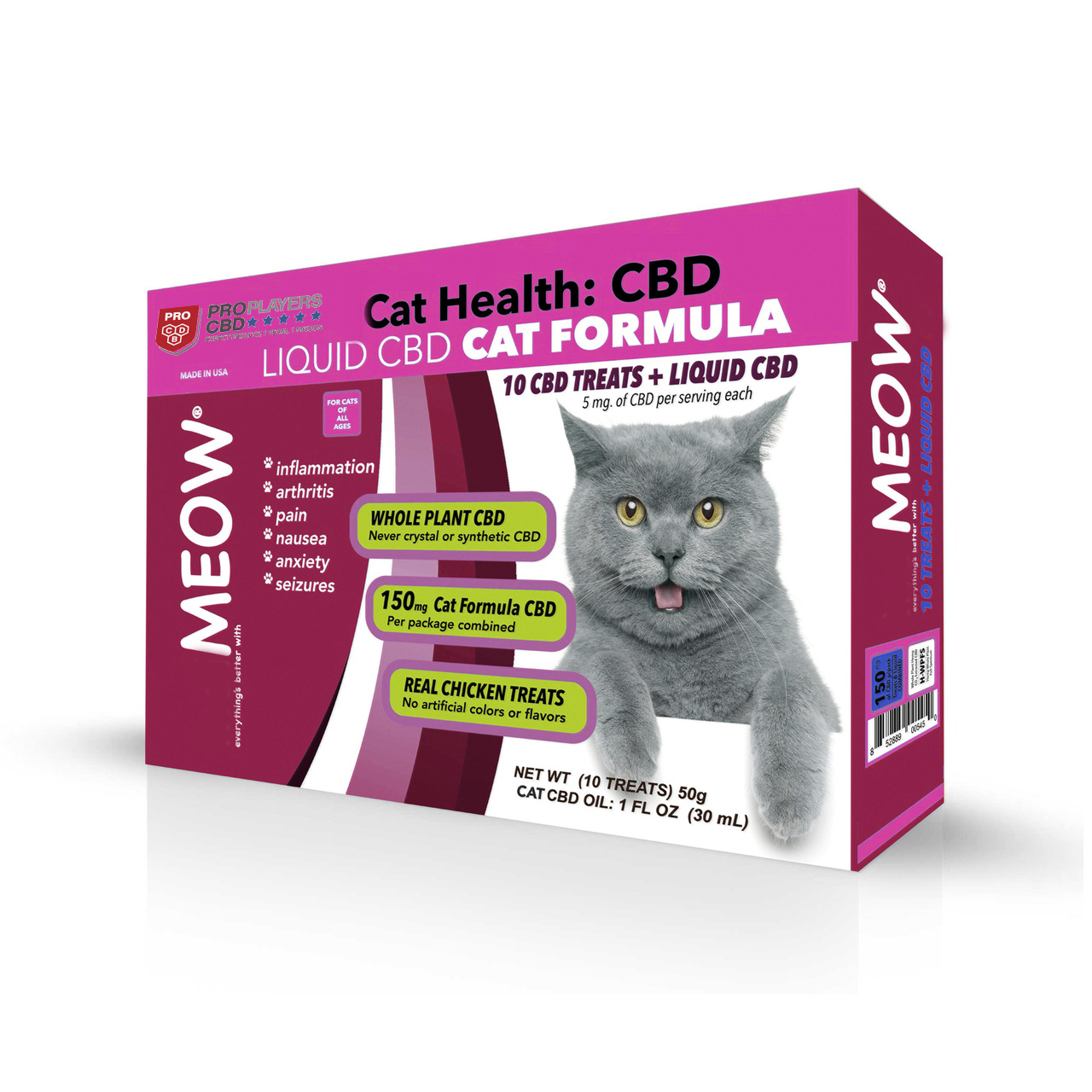
MEOW MEOW

CBD Liquid 30 ml / 1 fl oz bottle + PRO-PETUSA CBD Chicken Treats for Cats

Buy Now = Meow

Our Furry Team - A Place Share Your Family pictures

CBD & OUR PETS FAQ's


SAFETY: HEMP VS. MARIJUANA

Although hemp and marijuana are both classified as cannabis, they are distinctly different varieties. Recreational marijuana is very high in euphoria-producing THC, while hemp plants contain virtually no THC but have high levels of beneficial CBD. Hemp-derived CBD is not psychoactive and it has no unpleasant side effects. Hemp products containing less than .3% THC are legal for sale in all 50 states. CBD from hemp is not regulated as a drug and has no known toxicity level.

ADMINISTERING CBD AND DETERMINING DOSAGE

CBD is available in many convenient forms. Extracts can be given from a dropper bottle directly into the mouth, added to food, dropped on a treat, rubbed into bare skin or inside the ears, or dropped on an animal’s paw so they will lick it off. You can also find hemp CBD biscuits, hemp CBD capsules and gel caps, and topical hemp CBD ointments. 

Dosage can vary quite a bit from one situation to the next. It may be necessary to experiment a little to find the right amount, and how often to give.

Typical suggested starting dose: 1 mg – 5 mg per 10 lbs. of bodyweight

    Cats: 1 – 5mg

Dogs:

10 lbs

 20 lbs

 30 lbs

 40 lbs

 50 lbs

60 lbs

70 lbs

 80 lbs


 1 – 5mg

 2 – 10mg

 3 – 15mg

 4 – 20mg

 5 – 25mg

 6 – 30mg

 7 – 35mg

 8 – 40mg

Start with a dose in the middle of the range. Changes usually occur within 30 minutes. If there is no change after an hour, increase the dosage. Occasionally improvements will take more than one treatment. To control pain, give approximately every 8 hours. For other uses, or to break unwanted behavior patterns, give once or twice a day.

ISOLATE, BROAD SPECTRUM, AND FULL-SPECTRUM CBD

When determining which variation will work best for your pet, keep in mind that each has its benefits. Full-spectrum CBD products are the least refined and contain the greatest amount of beneficial plant matter in the form of terpenes and cannabinoids. These compounds work together with the CBD to create an entourage effect that can boost effectiveness. However, it does have a grassy flavor that may be off-putting to pickier animals. In comparison, CBD isolate is pure CBD; the most refined option. It contains no plant matter, so it has no flavor, making it a good choice for the pickiest pets. Broad spectrum CBD is the middle ground; it still contains just enough plant material and terpenes for an entourage effect but has a mild taste. Full-spectrum CBD has virtually no THC (less than 0.3%) and the both broad spectrum and isolate CBDs lack THC completely, making all options non-psychoactive.


Many people give CBD to their dogs to help control seizures.

Seeing your beloved dog have a seizure can be a frightening experience. Seizures can be subtle, indicated by staring, a dazed appearance, whining, twitching, jerkiness, heavy breathing, or unusually rapid eye movements. They can also be distressingly severe, resulting in uncontrollable fits, tremors, and even loss of consciousness.

Seizures are basically caused by the abnormal firing of neurons in the brain. If your dog has seizures, whether mild or severe, you should visit your veterinarian to determine the cause.

If you want to supplement your dog’s treatment with a natural remedy, CBD oil should be your first option. Cannabidiol (CBD), is a non-psychotropic component of the Cannabis sativa plant, which has been shown to have anticonvulsant properties. Extracted from industrial hemp (not marijuana) and legal in all states, CBD won’t make animals high and there are no known side effects.

How does CBD work to reduce seizures?

All mammals have an endocannabinoid system, a network of numerous receptors that regulates body functions. Endocannabinoids are synthesized on demand by the body to maintain homeostasis – a stable internal environment. When a condition such as epilepsy interferes with homeostasis, these internal mechanisms lag behind the body’s needs. Supplementing with the phytocannabinoids found abundantly in hemp can help restore balance.

Two types of endocannabinoid receptors have been identified: CB1 receptors, found predominantly in the brain, nervous system, glands and organs; and CB2 receptors, existing mainly in the regulatory cells of the immune system. While CBD supplements benefit both types, their ability to calm overactive neurons and control seizures comes from the interactions with CB1 receptors. When the nervous system has been impacted by an illness or injury, CBD supplements can restore homeostasis.

How effective is CBD at treating seizures in dogs?

Anecdotal feedback is highly encouraging. There are countless testimonials and endorsements from pet parents sharing how CBD has helped their furry friends overcome dog seizures, including cases where conventional medications haven’t helped. Regular use has shown to decrease both the frequency and severity of seizures.

Preliminary research is so highly promising that the American Kennel Club Canine Health Foundation is currently conducting research on CBD’s effectiveness at treating seizures in dogs https://www.akc.org/expert-advice/health/alternative-medicine/cbd-oil-for-dog-seizures/ through Colorado State University https://cvmbs.source.colostate.edu/preliminary-data-from-cbd-clinical-trials-promising/ Initial research found that 89 percent of dogs who received CBD in the clinical trial had a reduction in the frequency of seizures.

Additionally, the National Institute of Health has published CBD research demonstrating strong reductions in epileptic seizures in rodents and shows CBD to be an effective therapeutic anti-convulsant. https://www.ncbi.nlm.nih.gov/pubmed/22520455

How do you treat dogs’ seizures with CBD?

To reduce the severity and frequency of seizures, give your pet CBD regularly. Typically, relief will be best achieved by dosing twice a day. Dosage amounts can vary quite a bit from one situation to the next, so it may be necessary to experiment to find the right amount, and how often to give. Keep in mind that you cannot overdose and there is no toxicity associated with CBD.

CBD for dogs is available in many convenient forms. Extracts can be given from a dropper bottle directly into the mouth, added to food, dropped on a treat, rubbed into bare skin or inside the ears, or dropped on an animal’s paw so they will lick it off. You can also find hemp CBD biscuits, hemp CBD capsules, honey with CBD, and topical hemp CBD ointments. Make sure the CBD product you choose is lab tested so you can be sure you’re giving your pup the best opportunity for natural relief with hemp CBD.

CBD can provide multiple additional benefits.

Can CBD oil help dogs with anxiety?

CBD oil can be a natural, drug-free solution for calming anxious dogs.

As a pup, Bella had a rough start and continued to suffer from significant anxiety all her life, including having frequent nightmares. When we first gave her hemp CBD, we where initially skeptical that this natural product could make a difference. Prone to panting, pacing and barking, Bella’s anxiety had been problematic for all the dozen years together. After her first dose of CBD, Bella seemed to quickly become more relaxed. When other family members, who had no idea that Bella had been given hemp CBD, remarked on her calmer, happier demeanor, it was a testament to what hemp CBD can do to reduce a dog’s anxiety and calm restlessness.

There are so many situations that can trigger nervousness in a dog: traveling, a new home, new residents, loud noises, or separation, so many pup parents are looking for natural ways to ease their dogs’ anxieties without harmful side effects. CBD can be the just the solution to treat behavioral anxiety for dogs.

Will CBD oil make your dog high?

There are major differences between the hemp plant from which pet CBD (cannabidiol) oil supplements are extracted and cannabis. THC (tetrahydrocannabinol), the compound that gives marijuana its psychoactive properties, is only present in measurable amounts in cannabis, which contains very little CBD. Conversely, industrial hemp has high levels of CBD and virtually no THC. It’s important to note that THC can be toxic to dogs, but CBD is safe. Cannabis and THC are highly regulated even in states where its use has been legalized, but CBD extracted from industrial hemp is legal in all states.

Another point to keep in mind that is that CBD oil and hemp oil are not the same thing, especially for calming purposes. Though they’re from the same plant and neither product is psychoactive, hemp oil is made from pressed hemp seeds, which do not contain CBD. In comparison, CBD oil is extracted from a compound found in hemp flowers, leaves and stalks. Be sure to choose products that contain CBD, not just hemp oil.

The most important differentiation to remember is that hemp CBD offers all the benefits without the THC, so you can be assured that your dog won’t get high–instead, they’ll experience a level of mild relaxation without any intoxication.

How do you find the best CBD oil for dogs?

Due to sometimes confusing labeling and advertising restrictions, you’ll want to shop carefully to find the best hemp CBD for your dog. Look into how and where the hemp is grown, and make sure it’s pesticide-free, and lab-tested for potency and purity.

Make sure to compare the amount of CBD in the product, usually stated in mg. Compare the CBD content of the dose, not the package weight or bottle size. Most cost-effective options for larger dogs or dogs who will benefit from long-term use would be larger bottles of higher potency.

What’s the best way to give a dog CBD?

A variety of forms of hemp CBD for pets are available. CBD treats for dogs can be a convenient and enjoyable way to dose, but can get expensive for larger dogs over the long term, or may not be a good fit for dogs on a very limited diet.

You may want to choose CBD oil with terpenes that provide an entourage effect by offering a broad spectrum of beneficial, natural compounds.

Since some CBD products have a “grassy” taste, topical use can be the best option for finicky dogs. Coconut Oil with CBD is a wonderfully versatile product. It can be applied to the bare skin inside a dog’s ears to be absorbed transdermally, and since it’s also completely edible (and tasty) it can be added to food or treats.

Bottled CBD oils with droppers are a great option because you can easily give your dog the correct dose, adding it to food or a treat.

How much CBD should you give your dog?

Every dog and every situation is different, so you will need to try with a dose in the middle of the recommended range and monitor. You should see calming effects within an hour. If not, you may want to give additional CBD oil and observe your dog again. Your dog will not be lethargic, simply visibly calmer, and observable symptoms such as panting, pacing and whining should decrease once the right dosage has been found. Online charts give a range, but there is no known toxicity level, so you can safely experiment to find the right dose.

If you’re using other medications, make sure you check with your veterinarian before using CBD oil. Many holistic and integrative vets are more familiar with this option and will be easily able to answer your questions.

Hemp CBD has been the drug-free path to a happier, more relaxed life for many dogs, and it’s expected to be used even more widely in the future as more dogs experience the same calming results as Bella did.

Instagram did not return a 200.